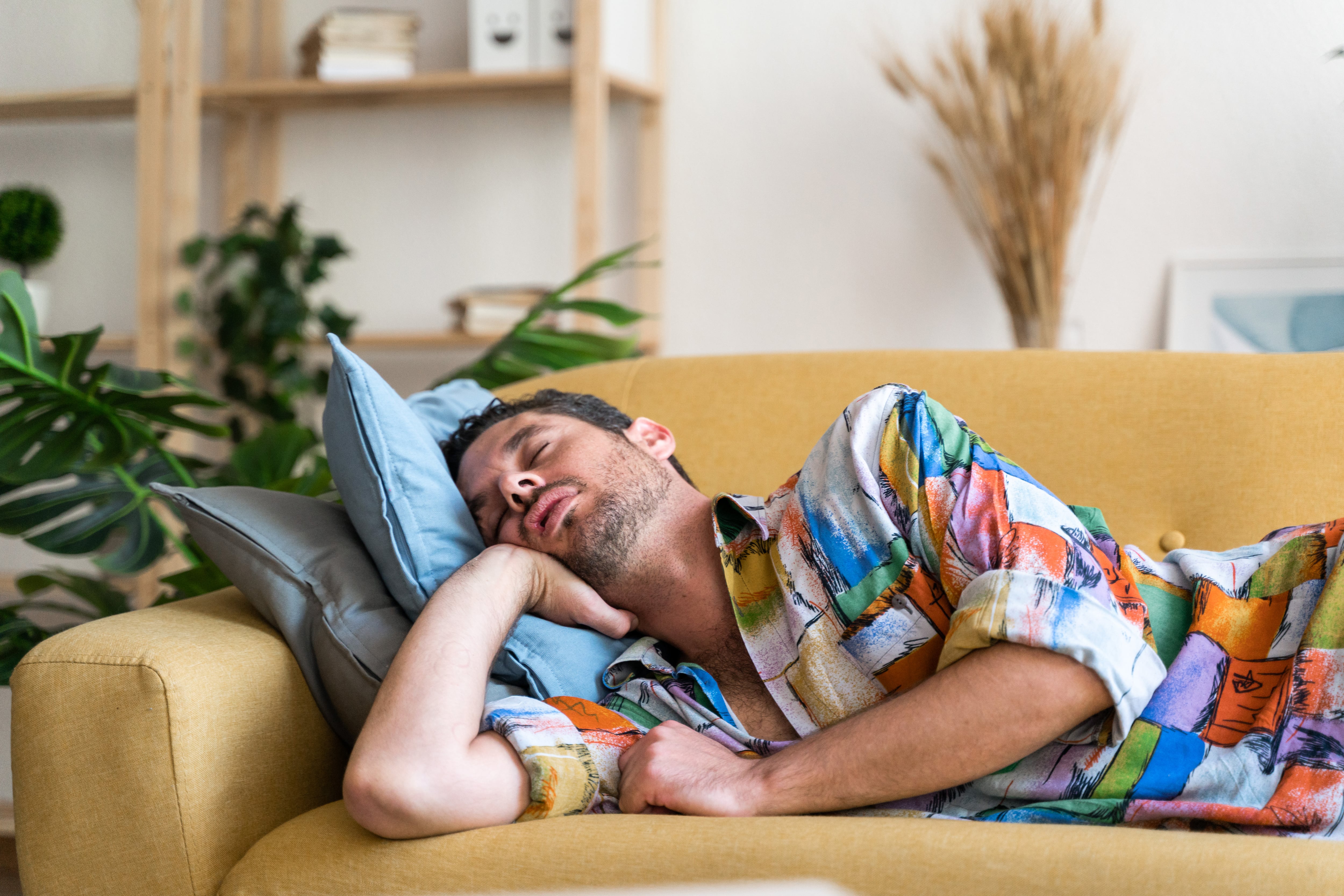
Humans are predisposed to experience a drop in alertness around midday, between six and eight hours after waking up
Juan Antonio Madrid is a professor of physiology at the University of Murcia, in Spain. He explains that the nap — like the nighttime sleep period — is, to some extent, biologically conditioned. Humans have a predisposition to experience a drop in alertness and vigilance around midday, between six and eight hours after waking up. In fact, the word “siesta” comes from the Latin “sexta,” which in Ancient Rome referred to the sixth hour of the day from dawn; a time reserved for rest and relaxation. “There are many markers we measure in the laboratory which indicate that this period is present, even without having eaten lunch,” he states.
The fact that the siesta seems to be a unique and singular characteristic of certain Latin American and Southern European countries has an explanation: high temperatures. “In the summer months, the period of maximum sunlight, which isn’t suitable for humans to engage in outdoor activities, coincides with our natural tendency to sleep,” Madrid points out. With climate change, it’s no surprise that the practice of taking a siesta could become widespread. For instance, in 2023, the Federal Association of Physicians of German Public Health Departments (BVÖGD) recommended implementing naps during the summer, in order to cope with high temperatures and improve productivity.
But what should a siesta really be like, so as to be truly effective and beneficial? Well, for a long time, the collective imagination was dominated by the idea that a siesta should involve “putting on pajamas, reciting prayers and using a chamber pot” — a saying popularized by Nobel laureate Camilo José Cela. That is, a siesta should be a long, deep sleep. However, nowadays — except for certain population groups, such as night shift workers (who may use long, strategic naps as therapeutic tools to compensate for sleep deprivation) — Cela’s siesta is the antithesis of the recommendations made by doctors and scientists.
“A long nap increases sleep inertia, which translates into mental sluggishness, clumsiness, irritability, or poorer performance for a period of 15 to 60 minutes, sometimes even longer, after waking up,” says María José Martínez Madrid, who holds a PhD in physiology and is CEO of Kronohealth. In fact, after a long nap, the risk of having a workplace or traffic accident actually increases.
Furthermore, adds Dr. Ainhoa Álvarez, president of the Spanish Sleep Society (SES), long naps reduce the accumulated sleep pressure for the night. Therefore, they can delay bedtime or fragment nighttime sleep, especially in people with insomnia. “It’s like taking caffeine in the mid-afternoon,” this clinical neurophysiologist argues. She points out that there are studies that also link long naps with a higher probability of various cardiovascular risk factors and with increased mortality.
Now, this relationship, according to Martínez Madrid, could be partly due to reverse causality: that is, people who tend to take longer naps have an underlying illness or sleep poorly at night. She encourages consulting a doctor about such conditions.
Having ruled out the benefits — at least, for the general population — of the “pajama, prayer, and chamber pot” nap, scientific evidence increasingly points to what’s known as the power nap: that is, a short nap of between 10 and 20 minutes (up to 30 at most), taken preferably in the earlier part of the afternoon, between 1:00 and 3:00 p.m.
“This timeframe allows us to reach a light sleep stage (N1-N2); [it] offers [health] benefits, [while minimizing] inertia and the negative impact on nighttime sleep,” Martínez notes. Among these benefits are increased alertness, sustained attention and reaction time, as well as an improved mood and a greater sense of energy.
Studies are beginning to explore the potential long-term health benefits (or drawbacks) of the power nap. “These are mostly observational studies: they’re heavily influenced by confounding factors, since those who take long naps sometimes already have poor health or poor sleep at night,” the CEO of Kronohealth explains. However, as Dr. Álvarez points out, while it’s true that more studies are needed to confirm the potential benefits, there’s evidence that seems to indicate an association between a power nap and a reduction in blood pressure and stress levels.
In recent years — in the human quest for optimization, as we strive to get the most benefit from every action — the so-called “coffee nap” has also begun to gain popularity; that is, a short nap that begins after drinking the classic after-lunch coffee. Currently, there are few scientific studies on this topic, while those that have been done have small sample sizes. However, they seem to support the claims of those who advocate this practice.
“It makes perfect sense, since blood caffeine levels rise 20 to 30 minutes after drinking coffee. So, it will cause you to wake up and prevent you from continuing to sleep or having a longer nap. It’s a way to manipulate nap time, without using an alarm clock,” says Juan Antonio Madrid.
María José Martínez adds that studies suggest an additional improvement in alertness levels compared to napping sans caffeine when performing tasks that require vigilance… but “coffee naps” should in no way be a universal recommendation: “You have to be careful with individual sensitivity to caffeine, consume moderate doses of coffee and definitely avoid this practice if [your] nap is late, or if coffee intake usually affects your nighttime sleep.”
This recommendation for individualization also applies when prescribing a nap. As experts point out, it’s generally a highly recommended practice for children and the elderly. It’s also beneficial for teenagers if they have sleep deprivation, provided that it’s short and not late in the day. However, even the most beneficial nap can be detrimental to people with insomnia or those with an evening chronotype, who naturally tend to go to bed late. These individuals can, in fact, enter a kind of vicious cycle: sleeping little at night creates greater pressure and a stronger need to sleep during the day… and a nap, in turn, will negatively impact their nighttime sleep.
Sign up for our weekly newsletter to get more English-language news coverage from EL PAÍS USA Edition
¿Quieres añadir otro usuario a tu suscripción?
Si continúas leyendo en este dispositivo, no se podrá leer en el otro.
¿Por qué estás viendo esto?
Si quieres compartir tu cuenta, cambia tu suscripción a la modalidad Premium, así podrás añadir otro usuario. Cada uno accederá con su propia cuenta de email, lo que os permitirá personalizar vuestra experiencia en EL PAÍS.
¿Tienes una suscripción de empresa? Accede aquí para contratar más cuentas.
En el caso de no saber quién está usando tu cuenta, te recomendamos cambiar tu contraseña aquí.
Si decides continuar compartiendo tu cuenta, este mensaje se mostrará en tu dispositivo y en el de la otra persona que está usando tu cuenta de forma indefinida, afectando a tu experiencia de lectura. Puedes consultar aquí los términos y condiciones de la suscripción digital.
Comments
No comments yet.
Log in to leave a comment.