We need your help now
Support from readers like you keeps The Journal open.
You are visiting us because we have something you value. Independent, unbiased news that tells the truth. Advertising revenue goes some way to support our mission, but this year it has not been enough.
If you've seen value in our reporting, please contribute what you can, so we can continue to produce accurate and meaningful journalism. For everyone who needs it.
€2 a Month €5 a Month One-off amount I already contribute Sign in. It’s quick, free and it’s up to you.
An account is an optional way to support the work we do. Find out more.
They were how we got to work, brought children to school, headed off on holidays, or cleared our heads with a drive on a quiet evening. Noise, vibration and the smell of fuel were just part of the background.
That’s changing, and it’s changing quickly.
This week we saw news that new electric vehicle sales increased by just under 50% year-on-year in January and they overtook petrol and diesel sales for the first time. On DoneDeal Cars more people are searching for EVs specifically than ever before too.
People have mixed views on electric vehicles, but there is now no doubt we are starting to see them become what might be caused ‘reasonably plentiful’ if not anywhere near the targets that were set by various governments since the early 2000s.
I spent some time last week in a very good and very luxurious Volvo ES90. It was a vast electric vehicle sitting over five metres long and with more computing power than it would have taken to put a man on the moon a few decades ago.
The model I was driving was €100,300. Honestly, it was and is a fabulous car, but something struck me over the course of the week when it came to thinking about luxury. Over years of being someone who has had a deep love of the motor car, I realised that I associate luxury very heavily with the internal combustion engine.
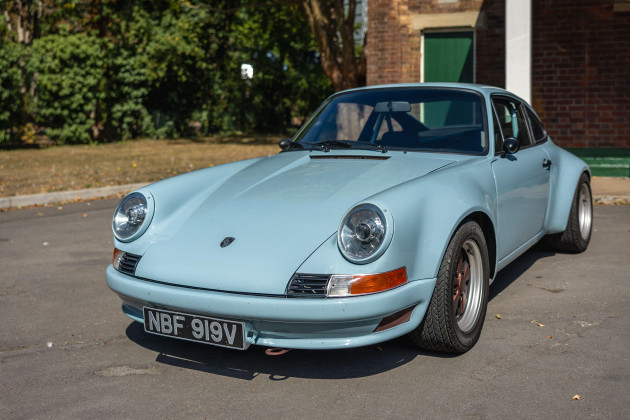
I grew up the son of a motoring journalist. My father, Pat Comyn, was the motoring editor of The Sunday Independent during the late 1970s, 1980s and early 1990s. And my first car memory is a 1979 Porsche 911. I don’t remember that much about being three, but I remember this car like it happened yesterday.
The sound of it was something that vibrated my tiny body. I was pretty much hooked then. Over the years, various cars would arrive to our street in Drogheda and the large luxury ones were always fascinating for their array of buttons and gadgets, the smell of wood and leather but for me, mostly because they seemed to have confusion of wildebeest (I had to look that up) under the bonnet.
The V6, the V8, the V10 and in rare cases the V12 added more cylinders and more grunt to remind everyone else that you’ve been successful in life.
Nonsense of course, but try telling young, impressionable Paddy that!
Within a decade, electric cars will dominate Irish roads, not just in cities but everywhere. And that is the right direction. Cleaner air, lower running costs and reduced dependence on fossil fuels are all things to be welcomed. But as this transition gathers pace, it raises an interesting question. As internal combustion fades from everyday life, will petrol and diesel cars start to become the luxury objects of the future?
I think, in many cases, they will. Not all of them, and certainly not most of them. But some, without doubt. We’ve seen this pattern before.
When digital photography took over, film cameras didn’t disappear; they became specialist tools for enthusiasts.
When smartwatches became common, mechanical watches didn’t vanish; they became symbols of craftsmanship.
When streaming replaced physical media, vinyl records didn’t die; they became collectible – and more expensive. I bought a Nirvana record for my son recently and it cost more than my first Walkman.
When a technology stops being necessary, it often becomes desirable.
That’s what is starting to happen with engines. At the moment, petrol and diesel cars still feel normal. They are still everywhere. But in ten or fifteen years’ time, most commuting, company cars, taxis and family transport will be electric. Silence will be standard. Charging will be routine. Software updates will matter more than horsepower.
In that world, arriving in a beautifully kept V8, a smooth straight-six, or a naturally aspirated sports car won’t feel old-fashioned. It will feel intentional. It will feel like a conscious choice rather than a default. And that’s where luxury usually begins. Of course, this won’t apply to everything. A tired diesel saloon with high mileage and patchy history won’t suddenly become valuable. Most cars will still fade quietly into obscurity, just as they always have.
Future “luxury” petrol and diesel cars will be selective. They will tend to share certain qualities. They will have engines with real character: proper V8s, classic six-cylinders, flat-sixes from Porsche, Italian V8s from Ferrari, and old-school AMG units that were built in an era before downsizing and electrification became dominant. We already can see it happening in the classic car market, which is having a huge surge at the moment, with values really strong in 1980s and 1990s cars in particular.
Related Reads Think about it: If public transport was free, would you use it more? Surprise surprise: Ireland is among the most expensive countries in the EU to fill a car Road safety: Drivers use Netflix in their cars and we wonder why people are dying on the roads
They will also tend to have high build quality. Real leather. Solid switchgear. Physical buttons. Interiors that feel crafted rather than assembled around screens. And many of them will carry “last of” status: the final V8, the last naturally aspirated model, the last non-hybrid generation. In time, these cars will represent not just performance, but the end of an era.
Regulation will accelerate this shift. Over the coming years, running an internal combustion car will become more complicated. Fuel will become more expensive. Taxes will rise. Insurance may tighten. Access to some urban areas may be restricted.
Owning and running a petrol or diesel car will require more effort, more planning and more commitment than it does today. That, again, is how luxury tends to work. When something is easy and universal, it rarely feels special. When it becomes difficult and rare, it starts to acquire status.
There is also an emotional element that electric cars, for all their strengths, struggle to replicate. Most EVs are fast, quiet and smooth. Most are heavy. Most are dominated by screens and software. They differ in styling and range, but emotionally they overlap.
A great petrol car doesn’t. It has a sound, a smell, a rhythm and a personality. It vibrates gently at idle. It warms up slowly on a cold morning. It responds differently depending on how you treat it. Pressing the start button still feels like the beginning of something. In an EV, everything is instant, seamless and efficient. That is hugely impressive. It is also, for many people, slightly forgettable. That doesn’t make electric cars worse. It makes them better at what they are designed to do.
But efficiency rarely becomes collectible. We are already seeing early signs of this change. Clean performance cars are holding their value. Manual gearboxes are becoming rare and desirable. Well-kept examples of older models are being stored and cherished rather than traded in.
Some owners already see themselves as custodians rather than just drivers. That mindset will grow. For buyers today, this isn’t about rushing out to buy any petrol car as an “investment”. Most won’t be. But the right car, bought carefully and looked after properly, is becoming more than transport. It is becoming an experience. A weekend object. A reminder of how driving used to feel.
In the future, most journeys will be silent, clean and functional. That is progress, and it is welcome. But alongside that future, a small number of beautifully preserved petrol and diesel cars will be enjoyed in the way classic boats, vintage guitars or mechanical watches are enjoyed today. Not because they are better. Because they are different. Because they are rare. And because they remind us of something we no longer live with every day. That is usually the moment when ordinary objects become luxury.
Paddy Comyn is the Head of Automotive Content and Communications with DoneDeal Cars. He has been involved in the Irish Motor Industry for more than 25 years.
Note: Journal Media Ltd has shareholders in common with Done Deal Ltd
Readers like you are keeping these stories free for everyone… A mix of advertising and supporting contributions helps keep paywalls away from valuable information like this article. Over 5,000 readers like you have already stepped up and support us with a monthly payment or a once-off donation. Learn More Support The Journal
600px wide <iframe width="600" height="460" frameborder="0" style="border:0px;" src="https://www.thejournal.ie/https://www.thejournal.ie/readme/paddy-comyn-luxury-cars-6950610-Feb2026/?embedpost=6950610&width=600&height=460" ></iframe>
400px wide <iframe width="600" height="460" frameborder="0" style="border:0px;" src="https://www.thejournal.ie/https://www.thejournal.ie/readme/paddy-comyn-luxury-cars-6950610-Feb2026/?embedpost=6950610&width=400&height=460" ></iframe>
300px wide <iframe width="600" height="460" frameborder="0" style="border:0px;" src="https://www.thejournal.ie/https://www.thejournal.ie/readme/paddy-comyn-luxury-cars-6950610-Feb2026/?embedpost=6950610&width=300&height=460" ></iframe>
Comments
No comments yet.
Log in to leave a comment.