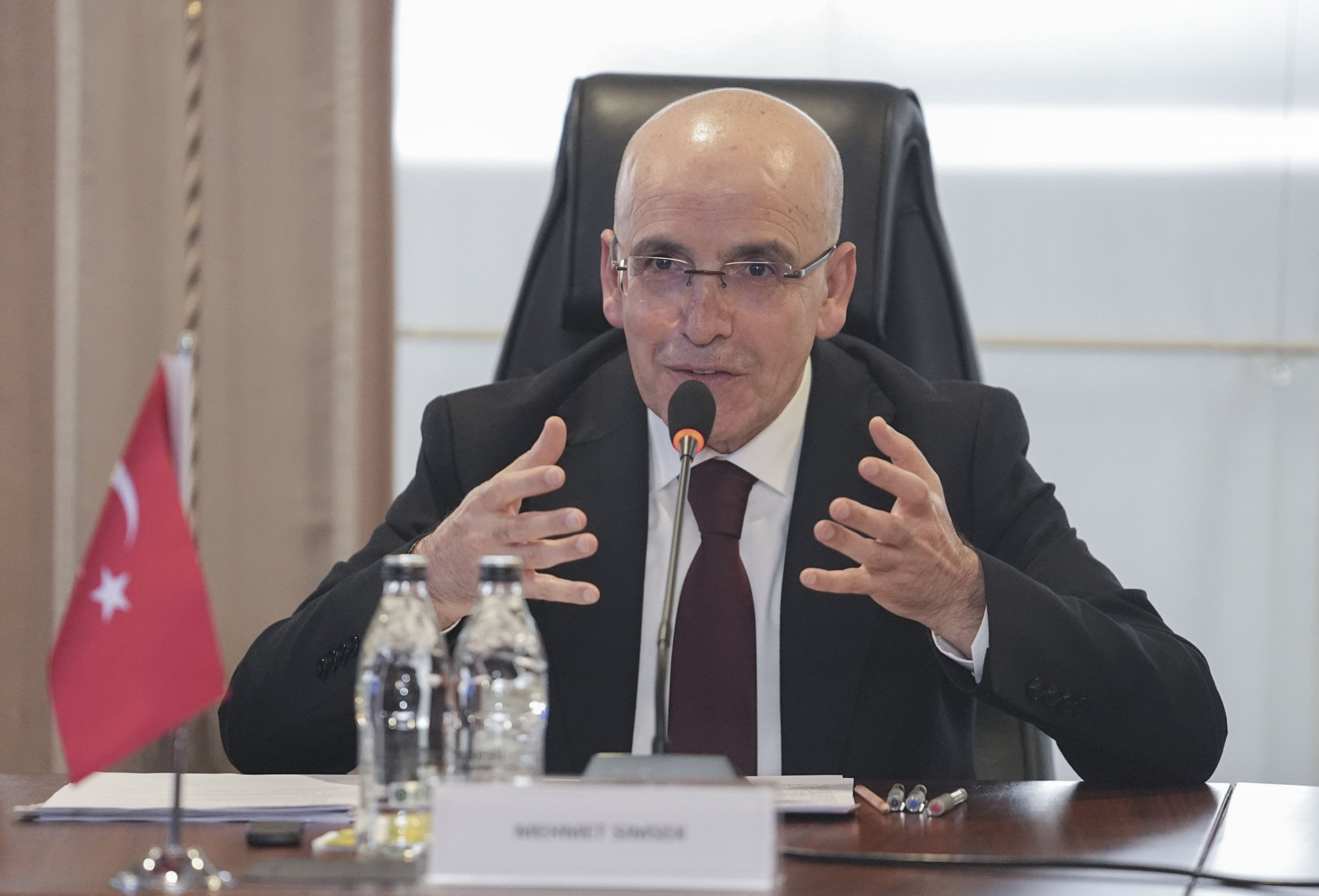
Şimşek, speaking at the Conference for Emerging Market Economies in Saudi Arabia, described last year as a challenging period for the global economy marked by "volatility, uncertainty, complexity, and ambiguity."
"It's been a difficult year with heightened uncertainty, in particular for emerging markets," he said.
Şimşek said Türkiye is relatively resilient to global trade fragmentation, noting that about 62% of its exports are covered by the EU Customs Union and free trade pacts with 27 countries.
While not fully immune, these agreements provide partial protection, and the rest of trade is largely concentrated in nearby regions such as the Middle East, North Africa, and Central Asia.
He said Türkiye ranks among the world's top 20 in services trade, highlighting its position as fourth in tourism and a global leader in construction and TV series exports. He stressed that services have so far been less affected by protectionism than goods, giving Türkiye an edge, and said the government is prioritizing the sector for its high added value and job creation potential.
Şimşek says Türkiye also prioritizes and invests in the field of artificial intelligence, and stated that along with infrastructure investments, they attach importance to the human capital dimension, skills development, and education.
Şimşek explained that they are also focusing on regional integration, stating that connectivity is a part of this, and that they are building new corridors.
He said Türkiye sits on the Middle Corridor from Beijing to London and is working on new routes linking the Gulf to global markets via Türkiye, adding that boosting connectivity is central to the strategy, alongside energy investments, including plans to build two or three additional nuclear power plants in the coming decades to meet rising demand driven by AI.
Comments
No comments yet.
Log in to leave a comment.