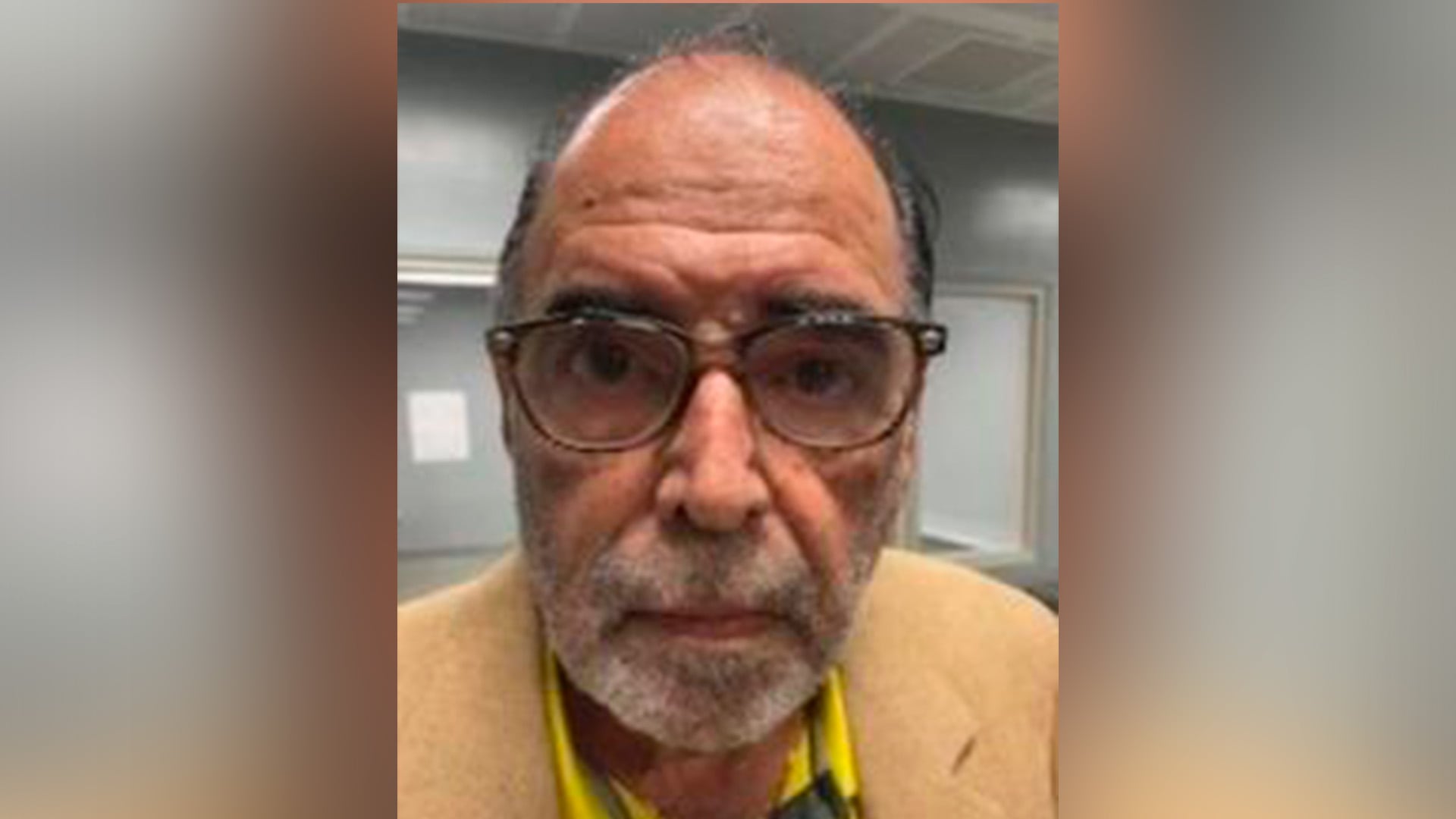
Wanted in Chile for crimes committed during the dictatorship, he was convicted in the US in 1987 for the 1976 assassination in Washington DC of Orlando Letelier and his young assistant Ronni Moffitt
The feeling in Chile is one of astonishment. Armando Fernández Larios, an iconic former agent of the DINA, Augusto Pinochet’s secret police (1973-1990), with five extradition requests from Chilean courts for human rights violations during the dictatorship, was arrested in Fort Myers, Florida, by U.S. Immigration and Customs Enforcement (ICE). On January 27 the agency reported his capture, along with 41 other Chilean nationals, on charges of homicide, although the raid took place in October 2025.
Fernández, a 76-year-old former major in the Chilean Army, had been living in the United States for nearly four decades. He participated in the 1976 Washington bomb attack that killed Orlando Letelier, the former foreign minister of socialist President Salvador Allende (1970-1973), and his assistant, Ronni Moffitt. He is considered a former elite agent of the dictatorship and someone who, due to his close ties with the leadership of the DINA, possesses a wealth of information. The lawyer Nelson Caucoto, who was part of the Vicariate of Solidarity, an organization that defended victims and their families during the repression, says that “he was a trusted man of [DINA chief Manuel] Contreras and Pinochet. And a man who began participating from the very beginning of the assault on La Moneda Palace,” on September 11, 1973.
Fernández is wanted in Chile for the murder of the U.S. citizen Ronni Moffitt and for the July 1976 assassination in Santiago de Chile of Spanish citizen and United Nations Economic Commission for Latin America and the Caribbean (ECLAC) official Carmelo Soria, committed by a DINA brigade. Francisco Ugás, the plaintiff’s lawyer in the case, tells EL PAÍS that several witnesses indicate that “Fernández was at the site of Soria’s detention,” where the diplomat was brutally tortured. That site was a DINA house in Lo Curro, in the eastern part of Santiago, where a couple of iconic agents lived: Michael Townley and the writer Mariana Callejas.
Fernández Larios is also wanted in Chile for the murder of Manuel Sanhueza Mellado in Pisagua, in the far north of Chile, and for his role in the so-called “Caravan of Death,” led by General Sergio Arellano Stark shortly after the coup. This group murdered 73 political prisoners in various Chilean cities without a trial, including the economist Winston Cabello. Furthermore, in 2005, Chilean authorities requested Fernández’s extradition for the 1973 disappearance of civil engineer David Silberman.
In 2003, the Federal Court of Miami found him legally responsible, following a civil lawsuit, for the murder of Winston Cabello in October 1973 in Copiapó, in northern Chile. There had been no news of him since then, until his arrest was made public at the end of January of this year.
Part of what has surprised people in Chile about his arrest by ICE is that Fernández Larios had supposedly been under legal protection in the United States since 1987. That year he secretly fled Chile amid a judicial investigation. “He provided a lot of information there [in the U.S.],” says human rights lawyer Luciano Foullioux. He obtained benefits through this cooperation, pleading guilty to covering up the murders of Letelier and Moffitt. He was detained for only five months and confessed to obtain a reduced sentence, just as did Townley, the perpetrator of the double murder in Washington. He also has legal protection, which was ratified in 2015.
A witness in that trial in Washington, in May 1987, was the Chilean ambassador to the United States, Juan Gabriel Valdés, who in 1976, while in exile in the United States, worked alongside Letelier. Valdés recalls to EL PAÍS a chilling scene that occurred in the courtroom when the former agent confessed. Orlando Letelier’s widow, Isabel Margarita Morel, was present at the hearing, accompanied by Valdés. “It was a packed courtroom. Fernández Larios was standing. Suddenly, the judge said: ‘Mrs. Isabel is here. The accused has admitted responsibility and participation in the murder of her husband and asks for your forgiveness.’ And Letelier’s widow said: ‘I am a Christian, and I forgive him. But I must also say, Your Honor, that the person responsible for my husband’s murder is not in this room; he is in La Moneda Palace, and his name is Augusto Pinochet.’”
The assassination of Letelier was also tried in Chile during the complex early years of the democratic transition. The investigation was conducted by Judge Adolfo Bañados, who died on February 1st at the age of 103, six days after Fernández Larios’ capture became public. In 1993, the judge handed down the first two convictions for human rights violations committed during the dictatorship, against Contreras and Brigadier Pedro Espinoza, his second-in-command. Both were imprisoned, after resisting arrest, at Punta Peuco prison in 1995. “Judge Bañados was an extraordinarily courageous man. I am certain that he would have imprisoned and convicted Fernández Larios,” former Socialist Senator Juan Pablo Letelier, son of Allende’s former foreign minister, told this newspaper.
The capture of Fernández, like many others, has surprised Juan Pablo Letelier. “He was one of the agents favored and promoted by the DINA. He was young at the time of the coup [23 years old], but he immediately joined the security teams and was part of the Caravan of Death. He deserted the DINA and entered the United States’ witness protection program, which I understand is for life. That’s why his arrest is so strange.”
The Letelier assassination was the second of three operations carried out by the DINA’s foreign intelligence department in the early years of Pinochet’s dictatorship. In 1975, agents attempted to assassinate Bernardo Leighton, former Minister of the Interior under Christian Democratic President Eduardo Frei Montalva (1964-1970), and his wife, Anita Fresno, in Rome; they survived with serious injuries. A year earlier, in 1974, the DINA assassinated the former Commander-in-Chief of the Army, Constitutionalist General Carlos Prats, and his wife, Sofía Cuthbert, in Buenos Aires; they died when a bomb exploded in their car. In 2002, Argentine Judge María Servini de Cubría attempted to question Fernández Larios and requested his extradition, but it was not granted. In Chile, those convicted included Contreras, Espinoza, Callejas, and José Zara, a former military officer who was arrested in August 2025 in connection with the Ronni Moffitt case. Townley, meanwhile, confessed to Judge Servini in 1999 that he was the perpetrator of the attack in Argentina.
Following the arrest of the former agent, Hernán Quezada, the lawyer for the three daughters of the Prats Cuthbert couple, told this newspaper that he is closely monitoring the case. In 2010, Chilean Judge Alejandro Solís handed down six convictions, and Fernández Larios is mentioned more than 100 times in the ruling for his ties to the DINA’s foreign department.
Since his arrest was made public, lawyers and family members of those wanted in Chile for the crimes for which the former DINA agent is being sought have been on high alert. Francisco Ugaz says that if he returns to Chile, there are several other cases in which he is implicated. However, because he lives in the United States, legal proceedings have stalled.
Juan Pablo Letelier also hopes that he will be tried in Chile: “Justice is slow… There are many families in Chile who were victims of the Caravan of Death and they want justice; in the case of Carmelo Soria, they also want justice. Armando Fernández Larios should never have been free in the United States.”
Sign up for our weekly newsletter to get more English-language news coverage from EL PAÍS USA Edition
¿Quieres añadir otro usuario a tu suscripción?
Si continúas leyendo en este dispositivo, no se podrá leer en el otro.
¿Por qué estás viendo esto?
Si quieres compartir tu cuenta, cambia tu suscripción a la modalidad Premium, así podrás añadir otro usuario. Cada uno accederá con su propia cuenta de email, lo que os permitirá personalizar vuestra experiencia en EL PAÍS.
¿Tienes una suscripción de empresa? Accede aquí para contratar más cuentas.
En el caso de no saber quién está usando tu cuenta, te recomendamos cambiar tu contraseña aquí.
Si decides continuar compartiendo tu cuenta, este mensaje se mostrará en tu dispositivo y en el de la otra persona que está usando tu cuenta de forma indefinida, afectando a tu experiencia de lectura. Puedes consultar aquí los términos y condiciones de la suscripción digital.
Comments
No comments yet.
Log in to leave a comment.