Sam Lane Sam Lane
Simeon Lancaster Simeon Lancaster
Despite the announcement of a drawdown in federal immigration enforcement agents in Minnesota, tensions remain high in the Twin Cities. Some communities say they've seen little change in the numbers of arrests or sightings of federal officers. As special correspondent Fred de Sam Lazaro reports, the crackdown has affected nearly every aspect of daily life, including the health of many residents.
Notice: Transcripts are machine and human generated and lightly edited for accuracy. They may contain errors.
Despite last week's announcement of a drawdown in federal immigration enforcement agents in Minnesota, tensions remain high in the Twin Cities.
Some communities say they have seen little change in the numbers of arrests or sightings of federal officers.
And, as special correspondent Fred de Sam Lazaro reports, the crackdown has impacted nearly every aspect of daily life, including many residents' health.
This is a new routine for Viviana Salazar…
Viviana Salazar, Volunteer:
I have already have a system.
… filling boxes at a Minneapolis food pantry for families now too afraid to leave their homes.
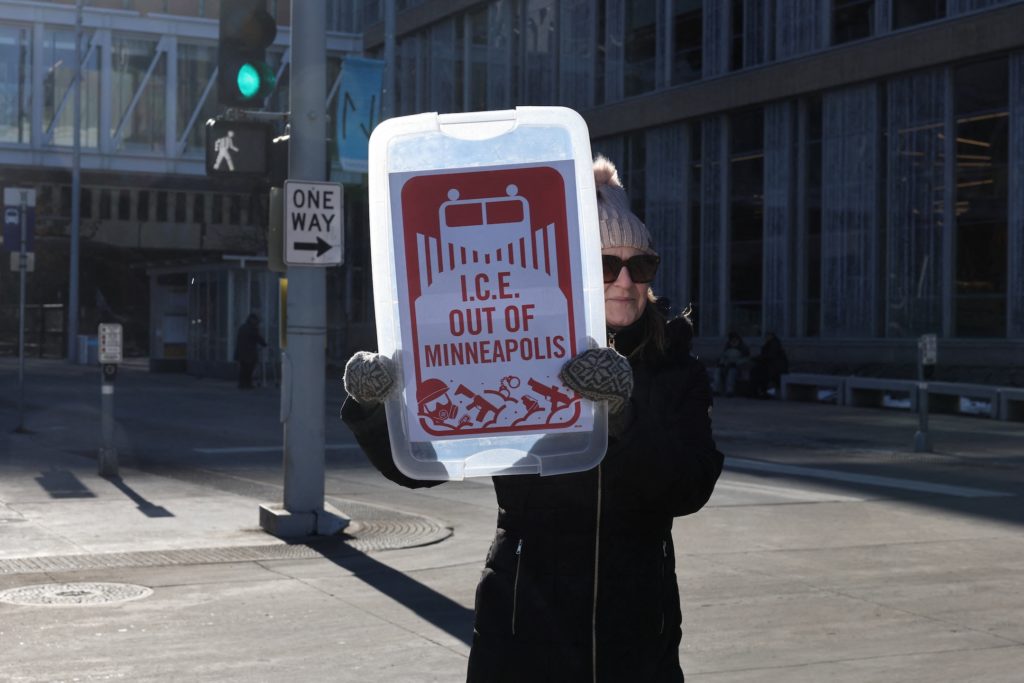
For weeks, networks of volunteers have sprung up across the Twin Cities to bring supplies to community members who fear that even venturing to a grocery store could lead to their arrest, as part of the massive federal immigration crackdown known as Operation Metro Surge.
I received a message from a teacher saying, my student had a glass of water for dinner. So that to me was heartbreaking.
When we met Salazar, she was delivering food to a 45-year-old father who's been in hiding for more than two months. He declined to be on camera, but spoke over the phone.
Day to day, what is the most difficult things that you have to deal with?
Man (through interpreter):
The most difficult thing is knowing what's happening and not being able to go out, locked in with fear that they come knock on your door. Because of the fear and the worry, I cry. It's the most heartbreaking thing to think about. If you leave, you might not be able to come back.
The fear that is forcing people to shut themselves in extends far beyond just grocery shopping. Children are not being sent to school. Adults are not going to work, complicating the challenge of paying the rent. And entire families are putting off going to the doctor.
Man (through interpreter):
I have type 2 diabetes and I have my pills, but they're about to run out. I have to go pick up more, but I'm afraid to go out.
For years, researchers have documented the possible health impacts of immigration enforcement, from worsening chronic conditions to poorer birth outcomes to heightened anxiety. The effects can be felt by both people targeted in the raids as well as their neighbors.
At a press conference late last month, dozens of Minnesota doctors spoke about the challenge of providing health care in this moment.
Dr. Roli Dwivedi, Minnesota Academy of Family Physicians: I have been a practicing physician for more than 19 years here in Minnesota. And I have never seen this level of chaos and fear in the health care for patients and for our health care teams.
Dr. Bryan Fate, Children's Minnesota:
And it's not that people aren't sick.
Bryan Fate is a pediatrician at Children's Minnesota. Emergency room visits at Children's are down almost 25 percent, but when patients do come in, they're often sicker. Admissions have jumped about a third.
I saw a girl who was about 5 years old last week. She had sat at home for essentially seven days with a fever and an ear infection. Pain was keeping her up at night. By the time that she had presented to us, her eardrum had ruptured.
He's received accounts from colleagues that paint a similar picture.
There are cases of appendicitis that have showed up late. There are terrible asthma exacerbations that came in late as well so that, by the time you get there, the kid is really struggling to breathe, 15-year-old with autism who came in with abdominal pain. And it turned out that his mother had been detained about a week earlier. So he had about three meals in five days.
With the number of families not coming in, Fate says the situation is eerily similar to the pandemic.
This is not a virus causing this. It is an action of the government, which can be redacted. And I think there is a feeling of helplessness there too. We can do our best to try and reach out to families and to make things like telehealth more possible.
But, like vaccinations, kids are falling behind on their healthy checkups. When families don't feel safe leaving the house, when they have to balance the health of their child with the safety of their family, no family should have to make that decision.
Meanwhile, fate says nonwhite hospital staff have even expressed fears driving to and from work.
At other hospitals, there are reports of federal agents staying bedside with detainees and trying to question or arrest patients.
Bystanders also said officers prevented doctors from trying to treat Renee Good and Alex Pretti right after they were shot.
The Department of Homeland Security told the "News Hour" only that medics were -- quote -- "on the scene" at both shootings, but did not respond to other criticisms about how Operation Metro Surge has impacted health care.
Across the Twin Cities, residents like Autumn Brown say the crackdown has strained their mental health.
Autumn Brown, Minneapolis Resident:
I think most people's nervous systems are really jacked up right now. We're all living on high alert. And the human body can take a lot, but our bodies aren't designed to be on high alert for such a long stretch of time. It's absolutely wearing on me. It's wearing on all of us.
The terror is real. And the care is real. And we feel that too every day.
One of the people trying to provide that care is Valerie Carrillo. She's a therapist at Canopy Mental Health & Consulting, which works with underserved populations in the Twin Cities.
Valerie Carrillo, Canopy Mental Health & Consulting: Clients of immigrant descent are very hypervigilant right now and are taking a toll from everything that's happening and are on a daily stress-out. I have seen those clients physically in my sessions come in crying and shaking and going through the emotions of having that safety kind of pulled underneath from them.
Carrillo, whose family is from Mexico, has carried her passport for months.
I think everyone in Minneapolis, including my clients, every single one of them, are experiencing collective trauma. And I am too right there with them.
For Viviana Salazar, also a U.S. citizen of Mexican descent, these food deliveries are how she's coping with the realities of life in Minnesota right now.
Are you personally afraid for yourself?
I am not afraid because I don't look Mexican. But my teenage daughter, she has dark skin. She has black hair. She has asked me: "What am I going to do if they pull me over? Are they going to shoot me?"
And when she asked me that question, my heart just broke. I can't believe we're living in this situation.
For the "PBS News Hour," I'm Fred de Sam Lazaro in Minneapolis.
Watch the Full Episode
By Margery A. Beck, Jake Offenhartz, Associated Press
Fred de Sam Lazaro Fred de Sam Lazaro
Fred de Sam Lazaro is director of the Under-Told Stories Project at the University of St. Thomas in Minnesota, a program that combines international journalism and teaching. He has served with the PBS NewsHour since 1985 and is a regular contributor and substitute anchor for PBS' Religion and Ethics Newsweekly.
Sam Lane Sam Lane
Sam Lane is reporter/producer in PBS NewsHour's segment unit.
Simeon Lancaster Simeon Lancaster
Subscribe to Here's the Deal, our politics newsletter for analysis you won't find anywhere else.
Thank you. Please check your inbox to confirm.
© 1996 - 2026 NewsHour Productions LLC. All Rights Reserved.
PBS is a 501(c)(3) not-for-profit organization.
Subscribe to Here's the Deal with Lisa Desjardins
Thank you. Please check your inbox to confirm.
Support for News Hour Provided By
Comments
No comments yet.
Log in to leave a comment.