Supermajority clears path for conservative Takaichi to make sweeping tax and defence reforms
Notifications can be managed in browser preferences.
Swipe for next article
Supermajority clears path for conservative Takaichi to make sweeping tax and defence reforms
BookmarkCommentsGo to commentsBookmark popoverRemoved from bookmarks
At such a critical moment in US history, we need reporters on the ground. Your donation allows us to keep sending journalists to speak to both sides of the story.
The Independent is trusted by Americans across the entire political spectrum. And unlike many other quality news outlets, we choose not to lock Americans out of our reporting and analysis with paywalls. We believe quality journalism should be available to everyone, paid for by those who can afford it.
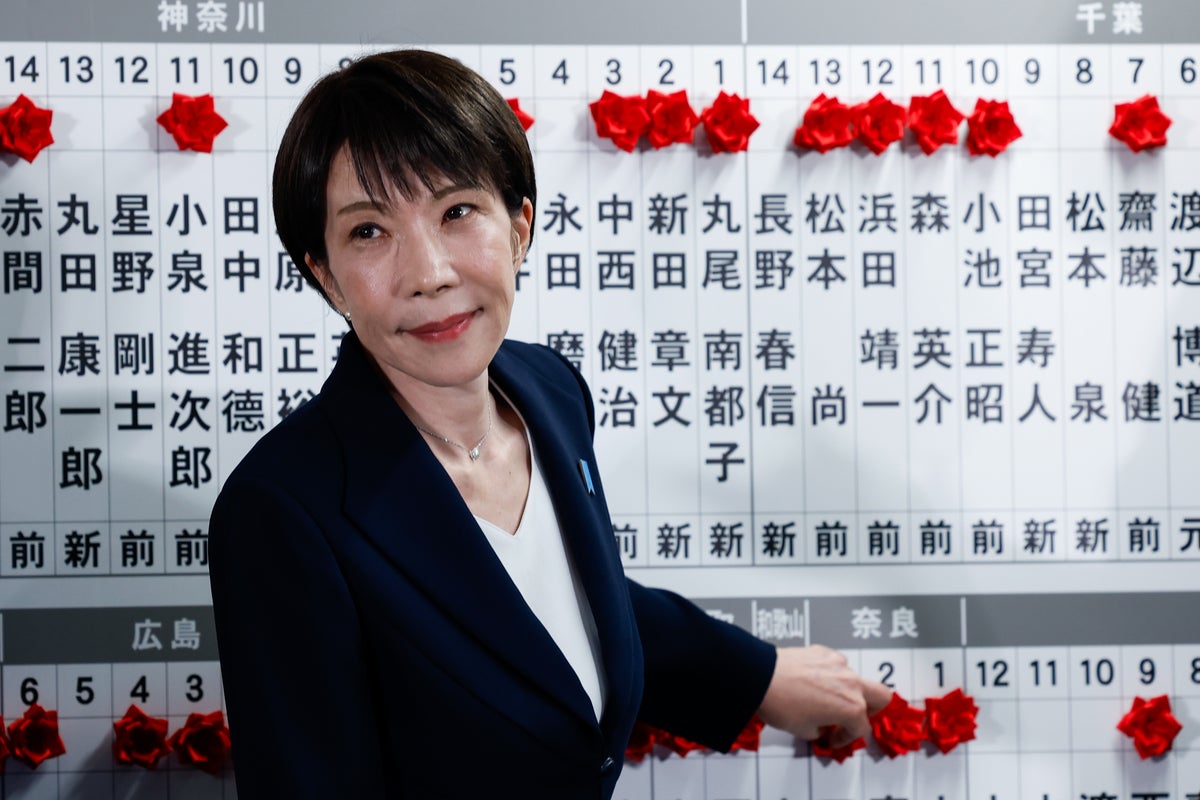
Japan’s ruling coalition has won the country’s general election by an historic margin, giving prime minister Sanae Takaichi a two-thirds supermajority and the mandate to pass major legislation while overriding the upper chamber of parliament.
Ms Takaichi’s Liberal Democratic Party (LDP) alone captured 316 of the 465 seats in the lower house of the Diet, Japan’s parliament, making it the party’s strongest performance since its founding in 1955.
The result led to a surge in Japanese stocks on Monday morning, with markets reacting positively to the clear signal on the country’s political and economic direction.
With its coalition partner, the Japan Innovation Party (Ishin), the ruling bloc now controls 352 seats, comfortably exceeding the threshold required to overrule the upper house – where the coalition lacks a majority.
A former heavy metal drummer from the hardline conservative wing of Japan’s dominant LDP party, Ms Takaichi has previously cited the late Margaret Thatcher as one of her political heroes.
Speaking after the results were confirmed, Ms Takaichi said the vote endorsed her legislative programme that had so far faced “a great deal of opposition”.
“This election involved major policy shifts particularly a major shift in economic and fiscal policy, as well as strengthening security policy,” she said in a television interview.
“These are policies that have drawn a great deal of opposition … If we have received the public's support, then we truly must tackle these issues with all our strength.”
Takaichi became prime minister after winning her party’s leadership election late last year, and said she had no plans to make immediate changes to her Cabinet.
"I think the current Cabinet is a good team,” she told NHK. “It's still only just over three months since it was launched, but the members have been working really hard and are producing results. So I don't think I will change it.”
The outcome marks a sharp reversal for the LDP after it lost control of both chambers during the previous 15 months under former prime minister Shigeru Ishiba.
Ms Takaichi, 64, was chosen to lead the party after Mr Ishiba resigned, and called the rare winter snap election to capitalise on high personal approval ratings only months into her tenure.
It was just the third postwar election held in February, with heavy snowfall disrupting travel, forcing some polling stations to close early and prompting voters in affected regions to trek through snow to cast ballots.
Outside a polling station in Uonuma, a town in Niigata prefecture, teacher Kazushige Cho said he voted for the LDP despite below-freezing conditions.
“It feels like she’s creating a sense of direction – like the whole country is pulling together and moving forward,” he said.
The scale of the win gives Ms Takaichi momentum to pursue pledges that have previously unsettled investors, including a promise to suspend an eight per cent sales tax on food to ease pressure on households facing rising prices.
Japan carries the heaviest public debt burden among advanced economies, and concerns about how the cut would be funded have weighed on markets.
Ms Takaichi said on Sunday she would accelerate consideration of the measure while keeping fiscal sustainability in focus.
“Her plans for the cut in the consumption tax leave open big question marks about funding and how she's going to go about making the arithmetic add up,” said Chris Scicluna, head of research at Daiwa Capital Markets Europe in London.
Nonetheless, business leaders welcomed the result as a return of stability after a period of relative chaos in Japan’s normally staid politics, and Japanese shares surged to record levels on Monday after her win.
The Nikkei 225 Stock Average jumped more than five per cent during the session, briefly topping the 57,000 mark for the first time, while the broader Topix index gained about three per cent.
Around two hours into trading, gains had eased slightly, with the Nikkei still up roughly 4.7 per cent.
Yoshinobu Tsutsui, head of the Keidanren business lobby, said the economy was “at a critical juncture for achieving sustainable and strong growth”.
The campaign also highlighted Ms Takaichi’s appeal to younger voters.
Her straight-talking style has driven a pop-culture phenomenon dubbed “sanakatsu”, roughly meaning Sanae-mania, with fans snapping up accessories she is known for using in parliament.
Ms Takaichi’s nationalistic leanings and emphasis on security, however, have strained relations with China.
Weeks after taking office, she set off the most serious dispute with Beijing in more than a decade by publicly outlining how Tokyo might respond to a Chinese attack on Taiwan, the self-governing island claimed by China.
Beijing answered with countermeasures, including urging its citizens not to travel to Japan.
Taiwan’s president, Lai Ching-te, was among the first foreign leaders to congratulate Ms Takaichi, saying he hoped her victory would “bring a more prosperous and secure future for Japan and its partners in the region”.
The strengthened mandate could hasten plans to expand Japan’s military capabilities, further angering Beijing, which has accused her of seeking to revive the country’s militaristic past.
Japan’s defence minister, Shinjiro Koizumi, said on Sunday evening he wanted to press ahead with strengthening defence while continuing dialogue with China.
“Beijing will not welcome Takaichi’s victory,” said David Boling, a principal at the Asia Group, which advises companies on geopolitical risk. “China now faces the reality that she is firmly in place and that its efforts to isolate her completely failed.”
Ms Takaichi has pledged to revise security and defence policies by December, including boosting offensive capabilities and lifting a ban on weapons exports, moves that would further depart from postwar pacifist principles.
She has also advocated tougher measures on immigration, foreigners, and anti-espionage, including stricter rules for foreign property ownership and a cap on foreign residents.
International reaction was swift. US president Donald Trump congratulated Ms Takaichi in a social media post, wishing her “great success in passing your Conservative, Peace Through Strength Agenda”.
He added that it was “my honor to endorse you” and wrote: “She is a highly respected and very popular leader,” and “Sanae’s bold and wise decision to call for an election paid off big time.”
Mr Trump, who endorsed Ms Takaichi on Friday, said he would host her at the White House next month.
Join thought-provoking conversations, follow other Independent readers and see their replies
Comments
No comments yet.
Log in to leave a comment.