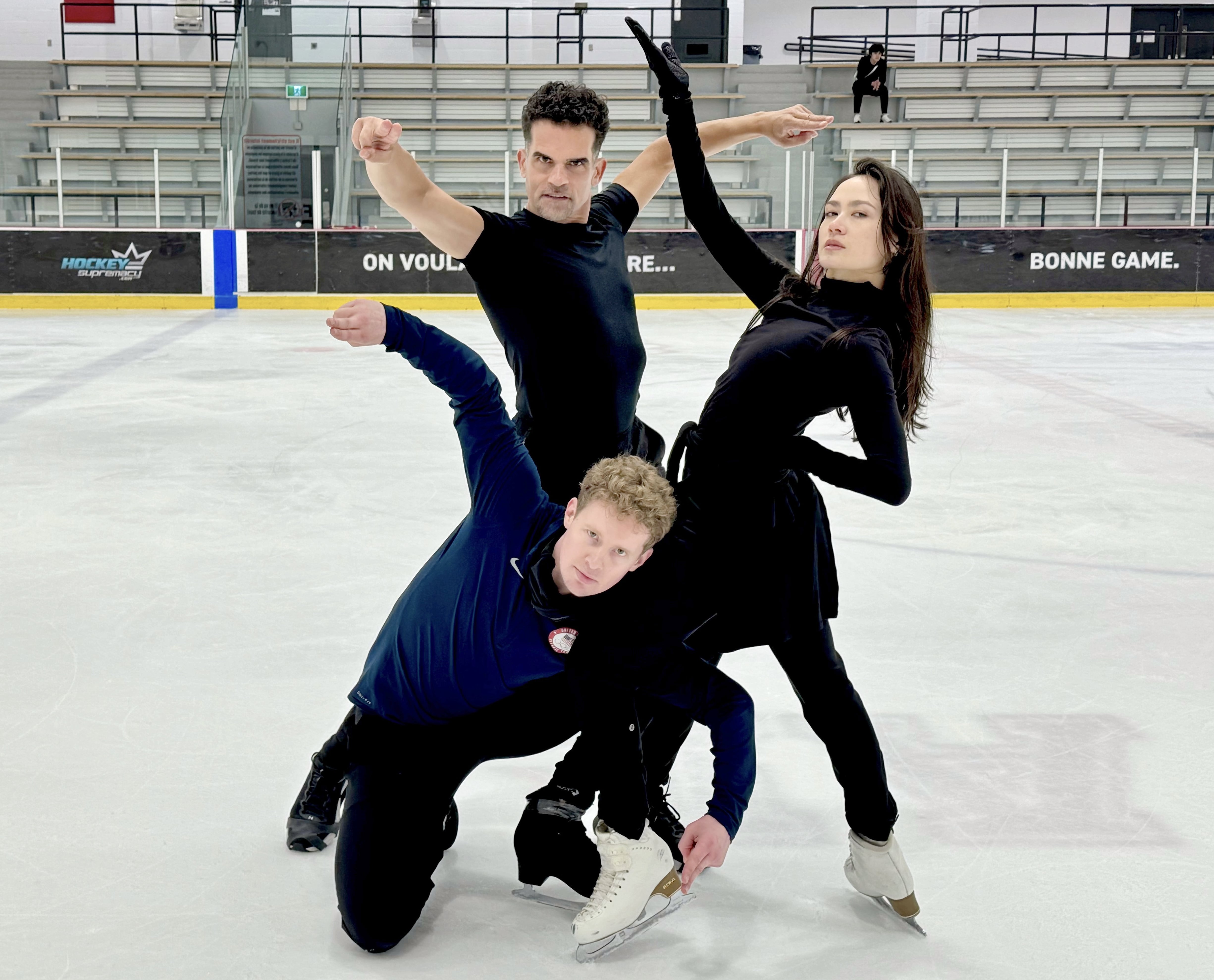
The Spanish dancer created the routine performed by US skaters Madison Chock and Evan Bates at the Milan–Cortina competition
When he was a child, Antonio Najarro, 50, would skate from his home to the Conservatory. His calling was dance, and he pursued it until becoming a leading figure in Spanish dance and flamenco, eventually directing the National Ballet of Spain from 2011 to 2019. He had no idea back then that skating would become another way of shaping and spreading dance. He didn’t even fully grasp it in 2002, when he received his first request to create a choreography for the French Olympic skaters Marina Anissina and Gwendal Peizerat, who had spent some time in Andalusia working with other flamenco creators — apparently without much success. “It seemed very difficult to me. Flamenco is so rooted in the earth that doing it on ice felt almost crazy. But curiosity got the better of me,” he says over the phone to EL PAÍS. “They saw my work and noticed that I had also choreographed for fashion and film, and I imagine that openness to taking dance beyond the stage was what interested them.”
Drawn in by this adventure on ice, Najarro packed his bags and moved to Lyon, where he spent long stretches working with them. Two years later, the pair won the gold medal at the Salt Lake City Winter Olympics. Their winning program, Malagueña, brought new shades and possibilities to figure skating — and opened new paths for Najarro to expand flamenco and his own creative work.
The most recent piece is titled The Matador and the Bull, and this Saturday it will compete at the Milan–Cortina Winter Olympics, performed by U.S. skaters Madison Chock and Evan Bates, seven‑time national champions and three‑time world champions. “I’m not interested in bullfighting, but they had a very clear idea of what they wanted. Through the relationship between a female matador [Chock] and a bull [Bates], they asked me to break gender stereotypes. And she ends with her hand on his head, dominating him.” Wearing a kind of cape‑like skirt, longer than what is usual in the sport, Chock has revealed herself to Najarro as a versatile skater with the soul of a dancer. “Spanish dance draws heavily on bullfighting gestures — positions, movements — and they’ve captured them beautifully.”
The Matador and the Bull, set to Paint It Black by the Rolling Stones in Ramin Djawadi’s arrangement for the HBO series Westworld, headed into Saturday’s event as the clear favorite, after sweeping three golds at the Cup of China (October), the Nagoya Grand Prix (December), and Skate America (November). The pair took first place, winning 10 points for Team USA in the Olympic figure skating team.
View this post on Instagram Since he began choreographing for ice skating, Antonio Najarro’s work has won seven Olympic gold medals, earned through his contribution that emphasizes the most artistic side of the sport. “Even Paloma del Río [the Spanish journalist and legendary voice of TVE’s broadcasts] has praised on several occasions this quality of choreography that goes a little further,” Najarro says. “After that Malagueña I choreographed, dance creators began appearing more regularly in skating. Before that, it was the coaches themselves who put the programs together,” explains Najarro, who has worked with skaters from different countries and says he sets aside political or national considerations when deciding whether to take on a project.
What does he look for when deciding to work with certain artists? “That they’re not afraid and that they like to take risks,” the choreographer says. “That they’re open to exploring different paths, even if they feel uncomfortable at first because they’re unfamiliar. I’ve also been lucky enough to work with the best, technically speaking,” he adds. Spanish skater Javier Fernández is one of them. A seven‑time European champion and Olympic medalist, he also collaborated with Najarro beyond the world of competition. That was with the show Flamenco on Ice (2019), right after retiring and after winning his seventh consecutive European gold in Minsk.
When Najarro took charge of this flamenco‑on‑ice production with Fernández, he was directing the National Ballet of Spain, where he also left his mark with the kind of open, permeable Spanish dance he champions — one that breathes beyond rigid compartments, connects with other disciplines, and becomes more visible.
Synchronized swimming is one example, a sport in which the choreographer has also contributed his creations. “My goal is to project Spanish dance and flamenco into every possible context. And in figure skating, I work so that what you see on the ice are true dancers — skaters who absorb the artistic essence of movement.”
Coming back the other way, from skating to dance, he says he has learned several things he later applied to his own company. “For instance, the fact that there isn’t a single focal point or front for the audience. This concept of creating in 360 degrees has helped me broaden my staging vision.”
Najarro stresses the importance of understanding the different skating disciplines when approaching a choreography. He focuses on ice dance, a freer category in which acrobatics are not the main element. “There are many rules; in fact, the first thing I do when I start creating is include them, so I know what can and cannot be done.” A clear sequence of choreographic steps, spins, and a diagonal are required; lifts that raise the female skater above the male skater’s shoulders are not. “Only lifts around the body are allowed.”
Meanwhile, the choreographer continues working with his dance company, which has three productions on national and international tours that will take them to France, Russia, and China in the coming months: La Argentina en París. El contrabandista y sonatina, Romance sonámbulo, and Querencia.
Sign up for our weekly newsletter to get more English-language news coverage from EL PAÍS USA Edition
¿Quieres añadir otro usuario a tu suscripción?
Si continúas leyendo en este dispositivo, no se podrá leer en el otro.
¿Por qué estás viendo esto?
Si quieres compartir tu cuenta, cambia tu suscripción a la modalidad Premium, así podrás añadir otro usuario. Cada uno accederá con su propia cuenta de email, lo que os permitirá personalizar vuestra experiencia en EL PAÍS.
¿Tienes una suscripción de empresa? Accede aquí para contratar más cuentas.
En el caso de no saber quién está usando tu cuenta, te recomendamos cambiar tu contraseña aquí.
Si decides continuar compartiendo tu cuenta, este mensaje se mostrará en tu dispositivo y en el de la otra persona que está usando tu cuenta de forma indefinida, afectando a tu experiencia de lectura. Puedes consultar aquí los términos y condiciones de la suscripción digital.
Comments
No comments yet.
Log in to leave a comment.